Shell We Dance: A Designer’s Review for Summer Embroidery
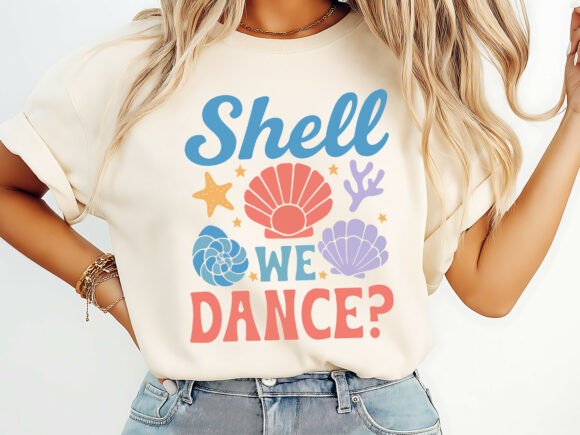
As an embroidery designer who has spent years digitizing and reviewing countless files, I approach every new asset with a mix of curiosity and skepticism. We all know that what looks vibrant on a screen does not always translate seamlessly to thread and fabric. Recently, I took a close look at Shell We Dance – T-Shirt Design, a playful graphic featuring colorful seashells, starfish, and coral elements. While the product description labels it as a sublimation PNG, my focus here is strictly on how this visual concept performs when adapted for real-world stitching projects. For those of us running craft businesses or creating personalized gifts, understanding the transition from digital graphic to tactile embroidery is crucial.
First Impressions: Coastal Charm Meets Stitching Reality
The immediate mood of Shell We Dance – T-Shirt Design is light, breezy, and undeniably summer-ready. The layout clusters marine elements in a way that feels organic rather than rigidly geometric. From a design perspective, this asymmetry is both a blessing and a challenge. The whimsical arrangement of seashells and coral creates a natural focal point that draws the eye, making it an excellent candidate for statement pieces like tote bags or the chest area of a sweatshirt. However, the intricate details of the starfish and the delicate curves of the shells require careful consideration regarding stitch types. In a digital graphic, gradients and fine lines are effortless; in embroidery, they demand precise digitizing to avoid bulk or thread breaks.
For Etsy sellers and small shop owners, the visual personality of this design is a strong selling point. It taps into the popular coastal grandma aesthetic and beach vacation trends without being overly cliché. The playful pun in the text adds a layer of humor that increases the giftability of the finished product. When I visualize this as a machine embroidery design, I see potential for high customer engagement, provided the execution maintains the clarity of the original artwork.
Real-World Application: Where This Design Shines
I recently simulated a project using this concept for a custom embroidered tote bag. The broad, flat surface of a canvas tote is ideal for this type of clustered graphic. The design’s horizontal spread balances well against the rectangular shape of the bag. For this application, I would recommend using a combination of satin stitch for the outlines of the larger shells and fill stitch for the interior details to create texture. The contrast between the smooth satin edges and the textured fill mimics the natural variation found in real seashells, adding depth to the handmade product.
Beyond totes, Shell We Dance – T-Shirt Design works exceptionally well for summer apparel. Imagine this stitched onto the pocket area of a linen shirt or across the back of a lightweight cardigan. For baby embroidery, the soft, rounded shapes of the coral and starfish are appealing and safe, lacking sharp angles that might irritate sensitive skin. However, when scaling down for baby clothes, one must be cautious. Tiny lettering can become illegible if the stitch density is too high or if the thread thickness is not adjusted. I always advise testing the text portion separately to ensure the "Shell We Dance" phrase remains readable at smaller hoop sizes.
For holiday embroidery, particularly for summer vacations or beach-themed bridal showers, this design serves as a perfect centerpiece. It can be adapted into an embroidered patch for caps or hats, where the durability of the stitches matters most. In these curved applications, the design’s compact nature helps it conform to the fabric without excessive pulling or distortion.
Navigating Technical Challenges and Fabric Choices
While the aesthetic is charming, practical embroidery requires us to address technical limitations. The original file is described as a PNG, which means it is a raster image, not a native embroidery file. This is a critical distinction for designers. You cannot simply load a PNG into an embroidery machine. You must either manually digitize the design or use auto-digitizing software, which often produces poor results for complex graphics. If you are purchasing this as a graphic to convert, be prepared to invest time in refining the stitch path.
Fabric texture plays a significant role in how Shell We Dance – T-Shirt Design will appear. On smooth, tightly woven fabrics like cotton poplin or high-quality t-shirt jersey, the details will pop. However, on textured fabrics like terrycloth towels or rough linen, the finer details of the starfish arms may get lost. In such cases, simplifying the design by reducing the number of running stitch details and relying more on bold satin stitch borders can improve clarity.
Dark fabrics present another challenge. If you plan to stitch this on navy or black apparel, you must ensure high contrast in your thread colors. Pastel shells may vanish against dark backgrounds unless you use a lighter underlay or choose brighter, more saturated thread colors. Additionally, stretchy fabrics require proper stabilizer usage. A cut-away stabilizer is often necessary for t-shirts to prevent the design from puckering after washing, while a tear-away might suffice for stable woven fabrics like aprons or pillow covers.
Enhancing Product Value and Brand Consistency
For commercial embroidery and small business merchandise, consistency is key. Using a well-balanced design like Shell We Dance – T-Shirt Design can elevate your brand’s perceived quality. Customers associate clean, well-executed embroidery with professionalism. When the stitch density is balanced—neither too sparse nor too bulky—the finished product feels premium. This attention to detail builds trust and encourages repeat buyers.
To maximize visual appeal, consider how the design interacts with other elements in your shop. If you offer a line of beach-themed items, this design can serve as a anchor piece. Pair it with complementary solid-colored threads to let the design speak for itself. Avoid over-accessorizing with rhinestones or additional prints, which can clutter the visual field and detract from the embroidery’s craftsmanship.
Practical Notes for the Serious Crafter
Before committing to a large batch of production, always test the design on scrap fabric identical to your final material. Check the thread color contrast under natural light, as indoor lighting can distort perceptions. Inspect small details closely; if the coral branches are turning into a messy blob of thread, you may need to adjust the stitch length or reduce the density in your digitizing software.
It is also vital to confirm licensing terms. Since this is marketed as a graphic, ensure you have the right to use it for commercial purposes if you plan to sell finished items. Many digital embroidery files come with specific restrictions regarding mass production or resale. Always read the fine print to protect your craft business.
Finally, create printable mockups to preview how the design looks on different products. A digital mockup can help you decide whether the design fits better on a sweatshirt embroidery project or a kitchen towel. By taking these preparatory steps, you ensure that Shell We Dance – T-Shirt Design translates from a cute concept into a profitable, high-quality reality for your customers.